
Etowah Released Mugshot Records
A booking photo is a law-enforcement record created during the booking process. In Etowah County, the official public channel most like a released-mugshot source is the sheriff's 48-hour released roster. During that rolling window, some released entries display a booking photo. Others show a photo-not-available placeholder. The public roster can confirm that a photo was attached to a booking entry, but a placeholder does not prove the underlying jail file lacks a photo.
Alabama's public-records framework supports access to many public writings, but it does not make every photo open in every case. Juvenile records, youthful-offender materials, sealed cases, expunged records, victim information, investigative limits, medical details, and agency redaction policies can affect release. For that reason, use "may be available" rather than assuming every Etowah County booking photo must be produced on request.
Public-record limit: A booking photo may be a public agency record, but access can change after expungement, sealing, juvenile limits, or source-agency redaction.
Where Etowah Mugshots Appear
The best source depends on why the photo exists. A county jail booking photo is different from an ADOC inmate photo, a registry photo, or a news image. The sheriff's source is the first stop for a recent local release. ADOC and registry channels apply only when the person is in a matching state-prison or registration category. Court records usually do not supply the mugshot, but they are essential for confirming what happened after arrest.
| Channel | Has photo? | How to access |
|---|---|---|
| Etowah sheriff 48-hour release roster | Some entries show booking photos; some show placeholders. | Use the official released roster during the rolling release window and open the profile link. |
| Sheriff records request | May include the booking photograph if available and releasable. | Ask the Detention Center for the booking sheet and booking photo with clear identifiers. |
| Etowah court records | Usually case context rather than the photo itself. | Use the Circuit Clerk public terminal, Just One Look, or written records request. |
| ADOC inmate search | May show a state inmate photo while the person is currently incarcerated. | Search by AIS number or name when the person was transferred to state prison. |
| ALEA or Etowah registry | May show a current registry photo for qualifying registrants. | Use state or local registry sources only when the offense category applies. |
| Local news or public notices | May republish a photo with limited context. | Verify any reposted image against sheriff and court records. |
Etowah Sheriff Release Photos
The official released roster is photo-forward during the 48-hour release window. Research found that released entries may display image tags labeled as mugshots, while other entries use a photo-not-available placeholder. The roster also shows name, booking number, age, release date and time, booking date and time, charges, bond, and a profile link. The profile can add arresting agency and a warning that charges and bail amounts may change after court appearances.
This makes the release roster the cleanest first channel for a recent Etowah County booking photo. It is not a permanent archive. A person released outside the rolling public window may disappear from the roster even though a booking record still exists. For a same-day or recent release photo, start with the official release list, then use the profile page for identifiers that can support a records request. For the release-list side of that workflow, use the 24-Hour Releases page.
Note: A missing photo on the public roster is not proof that the jail never captured a booking photograph.
Request Etowah Booking Photo
When the release roster has expired or shows a placeholder, the practical next step is a narrow public-records request to the sheriff or Detention Center. The sheriff contact research lists the Etowah County Sheriff's Office at 827 Forrest Avenue, Gadsden, AL 35901, and the non-emergency or Detention Center staff number as 256-546-2825. A request should identify the record well enough to avoid a wrong-person search.
Use the release roster fields if they were saved before the entry aged out. Booking number, booking date, release date, charge, bond, and arresting agency help the records staff locate the correct file. If those fields were not saved, pair the name with a date of birth or other identifier from the court record so the request does not rely on a common name alone.
- Gather the full name, date of birth if known, aliases, booking number, booking date, release date, charge, and arresting agency.
- Ask for the booking sheet, release date and time, release disposition if maintained, and the booking photograph if available and releasable.
- Keep the request narrow and tied to the Etowah County Detention Center booking record.
- Expect redaction or denial if the record is juvenile, sealed, expunged, sensitive, exempt, or otherwise restricted by law.
- Use the court record to verify the disposition if the photo is being reviewed after the charge changed or the case ended.
Alabama Code Section 36-12-40 gives citizens a right to inspect and copy public writings, except as otherwise provided by statute. Section 36-12-41 addresses copies upon request and payment of fees. Newer provisions in Sections 36-12-43 through 36-12-45 address request handling, clarification, procedures, and forms. Those rules support asking for the record, but they do not erase exemptions or redactions.
Etowah Court Photo Context
A mugshot without the court record can be misleading. The Etowah Circuit Clerk record request page says most court records are public, and the clerk's office has a public terminal for searching court record information. Written requests should include case number, party names, style of case, dates of birth, aliases, charges, and case type. Those details help connect the booking image to the legal outcome.
Court copy requests may also show why a photo should be read with caution. A charge can be amended, dismissed, merged into another count, followed by probation, or affected by a later expungement petition. The jail photo records the booking event. The court file records what happened to the case after that event.
The court record can show whether the case was dismissed, amended, sentenced, placed on probation, revoked, or later expunged. It can also show whether release from jail followed bond, time served, court order, probation, or transfer. For a full custody and records path, the Etowah County released inmates page covers how the release record, court record, DOC record, and federal or immigration sources fit together.
Etowah ADOC Registry Photos
ADOC photos and registry photos are not substitutes for a county jail booking photo. They come from different systems. If a person was transferred from Etowah County to state prison, ADOC may display a state inmate photo while the person is currently incarcerated. ADOC's public search says historical data is not available online, so it should not be treated as a released-mugshot archive after the person leaves state custody.
The sex offender registry is also category-specific. ALEA says it maintains the state repository and that local law enforcement registers offenders and forwards information to ALEA. It also says not all offenders are publicly disseminated because of juvenile, youthful-offender, or out-of-state status. A qualifying released registrant may have a current registry photo, but absence from the registry does not tell whether the person was released from jail or whether a booking photo exists.
The ALEA Community Information Center is the official state entry point captured for registry-style photo and public offender information.
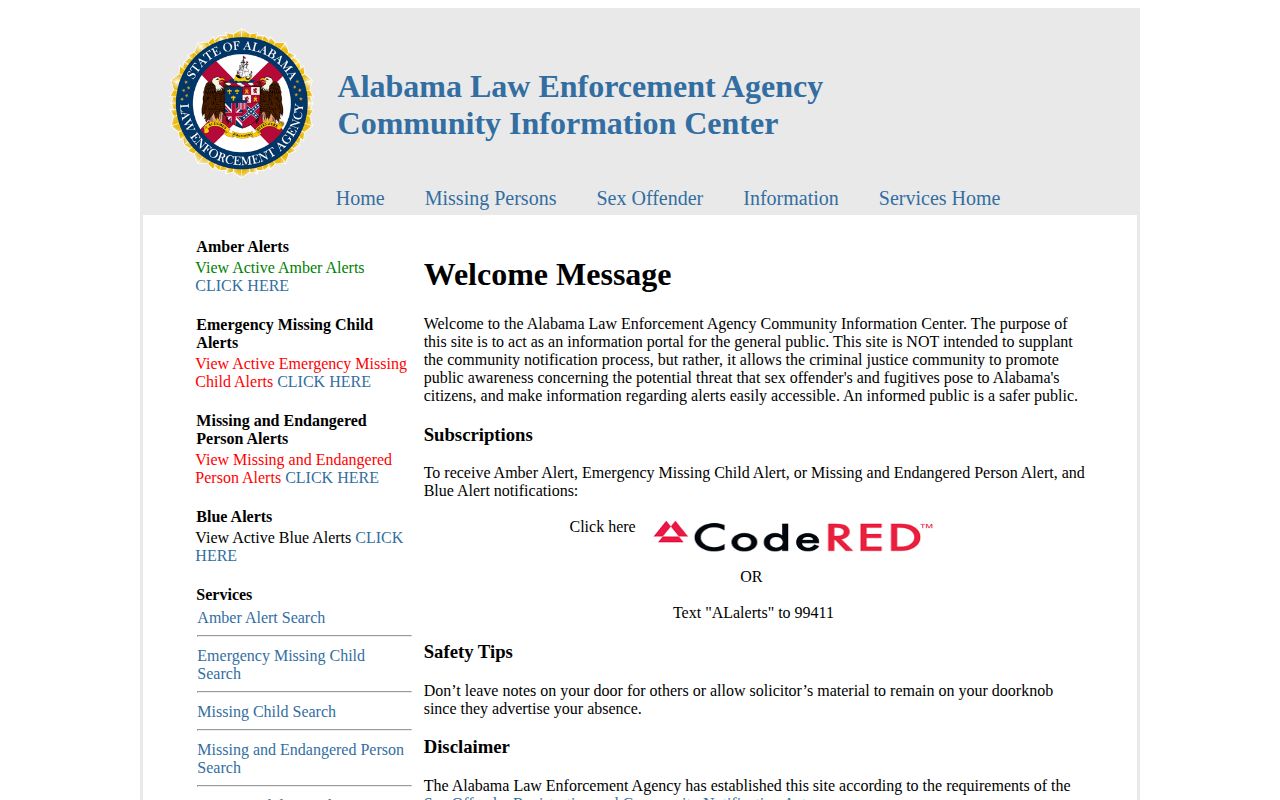
The registry source belongs only to qualifying registry cases and should be read apart from the Etowah sheriff's local booking-photo record.
Etowah Mugshot Expungement Effects
Expungement can change public access to arrest and court records, including records that give context to a booking photo. The Etowah Circuit Clerk expungement page says petitions for Etowah County District Court records or municipal court records located in Etowah County must be filed in the Circuit Criminal Division at 801 Forrest Avenue, Suite 202. The page states that the filing fee increased to $500 after July 1, 2021, and points users to Form 65 on Alabama e-forms and ALEA's criminal-record expungement kit.
The local page also describes timing. After 45 days from filing, if no objection is made by the district attorney or municipal prosecuting attorney, the petition is sent to a circuit judge for ruling. If an objection is filed, a hearing should be scheduled no sooner than 14 days from the objection filing date. The clerk says to allow up to 60 days to receive notice of ruling. A release from jail does not expunge a record by itself. Alabama Code Section 15-27 controls qualifying expungements, and Alabama courts grant them.
No current Alabama-specific commercial mugshot anti-pay-to-remove statute was confirmed in this research. The safer path is to use expungement orders, court correction channels, and official public-record contacts. For agency-held photos, send any restriction or correction request to the source agency that maintains the record.